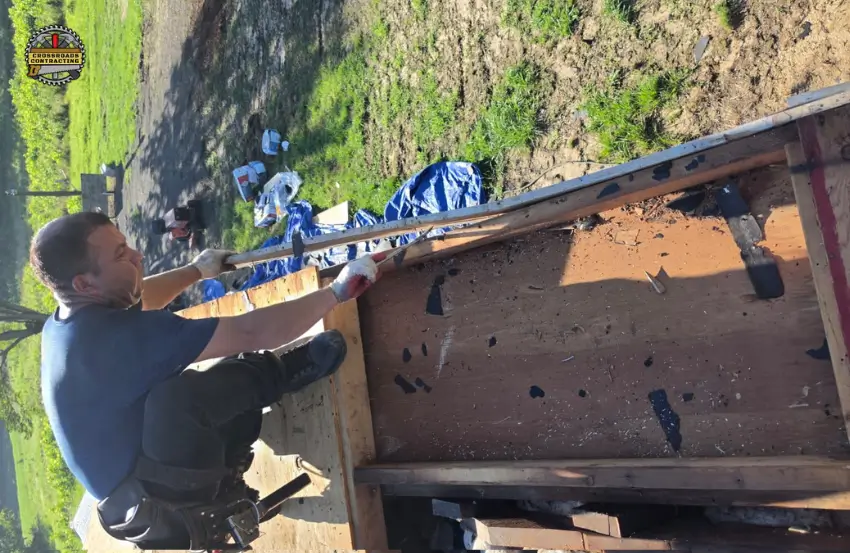
When comparing Anne Arundel County Roofing Companies, homeowners should look beyond price and consider licensing, insurance, roofing experience, written estimates, materials, warranties, permitting, and communication. A qualified roofing contractor should be able to explain whether your property needs a repair, maintenance, or complete roof replacement and provide a clear scope of work before construction begins.
In Maryland, homeowners should verify that a contractor performing home improvement work holds the appropriate Maryland Home Improvement Commission (MHIC) license. Maryland requires contractors performing or soliciting home improvement services to hold an MHIC license, including contractors based outside Maryland who perform this work in the state. The MHIC also recommends checking a contractor’s current license, insurance, references, and contract before hiring.
Anne Arundel County also has specific permitting requirements. For residential roof work, replacing shingles alone generally does not require a permit, while replacing sheathing and shingles and/or trusses requires a building permit. The exact requirement depends on the scope of the project, so homeowners should confirm the requirements before work starts.
For Maryland homeowners researching roofing services, Crossroads Contracting LLC provides another company to consider when comparing roofing and exterior-construction options. The most useful comparison is based on documented qualifications, project scope, materials, workmanship expectations, and total value rather than simply selecting the lowest estimate.
How Should You Evaluate Anne Arundel County Roofing Contractors?
A good starting point is licensing and insurance. Maryland’s MHIC requirements include proof of liability insurance, and licensed contractors must maintain the required coverage. The state also provides an online system for checking contractor license status.
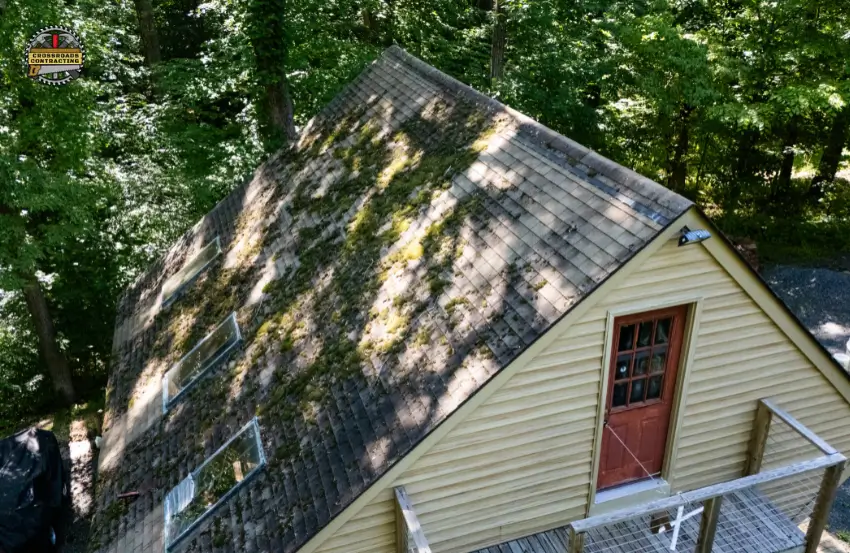
Homeowners should then examine the contractor’s experience with the specific type of roofing project involved. A minor roof leak requires a different approach from a complete roof replacement. Storm damage may require emergency stabilization, documentation, and coordination with an insurance claim. An aging roof may require an inspection to determine whether targeted repairs can extend its useful life or whether replacement makes more financial sense.
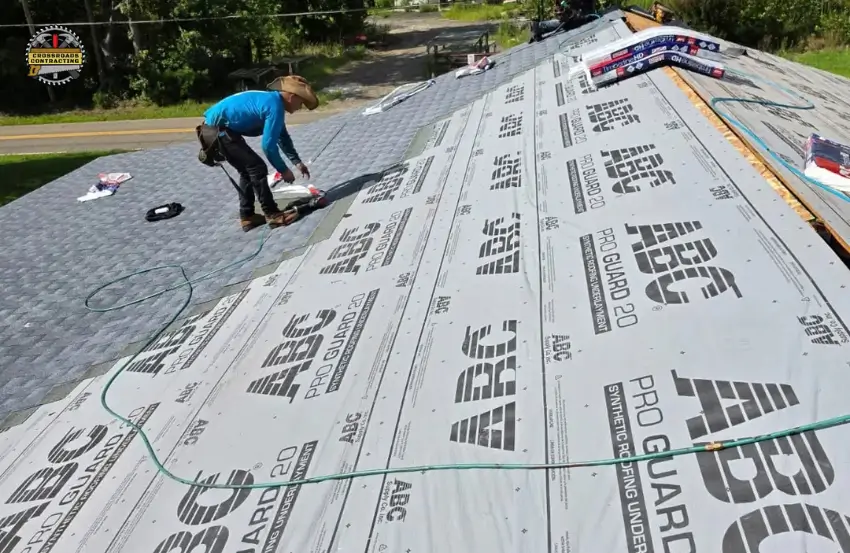
The contractor should clearly identify the roofing materials, number of layers being removed, underlayment, flashing, ventilation work, disposal, labor, permits when applicable, and warranty information in a written estimate. Comparing estimates on these details provides a much more meaningful picture than comparing the final price alone.
What Permits Are Needed for Roof Work in Anne Arundel County?
Permit requirements can vary according to the work being performed. Anne Arundel County states that residential roof replacement and repair involving only shingle replacement generally does not require a permit, while replacement involving sheathing and shingles and/or trusses requires a building permit.
The county also requires applicants to submit new permit applications, with specified exceptions, online through its Land Use Navigator system as of December 1, 2025.
This matters because permit responsibility should be clear before a roofing project begins. Maryland’s MHIC explains that the prime contractor on a home improvement project is responsible for obtaining required building permits or ensuring they obtain them.
How Much Does Roof Replacement Cost in Anne Arundel County?
Roofing costs vary significantly, so a single universal price is not reliable. The size and pitch of the roof, existing roof layers, decking condition, material selected, flashing requirements, ventilation, accessibility, disposal, and labor can all affect the final project price.
For example, a relatively straightforward asphalt-shingle replacement on a moderately sized home may involve fewer complications than a roof requiring extensive decking replacement, chimney flashing repairs, ventilation improvements, or structural work. Two estimates with different prices may therefore represent substantially different scopes of work.
Anne Arundel County’s permit fee structure also calculates building permit fees using the estimated value of the work, with roofing included when determining that valuation.
Rather than focusing only on the cheapest roofing estimate, homeowners should compare what each contractor is actually including. A detailed proposal can reduce unexpected change orders and make the project’s expected return on investment easier to understand.
What Should You Know About Roof Inspections and Storm Damage?
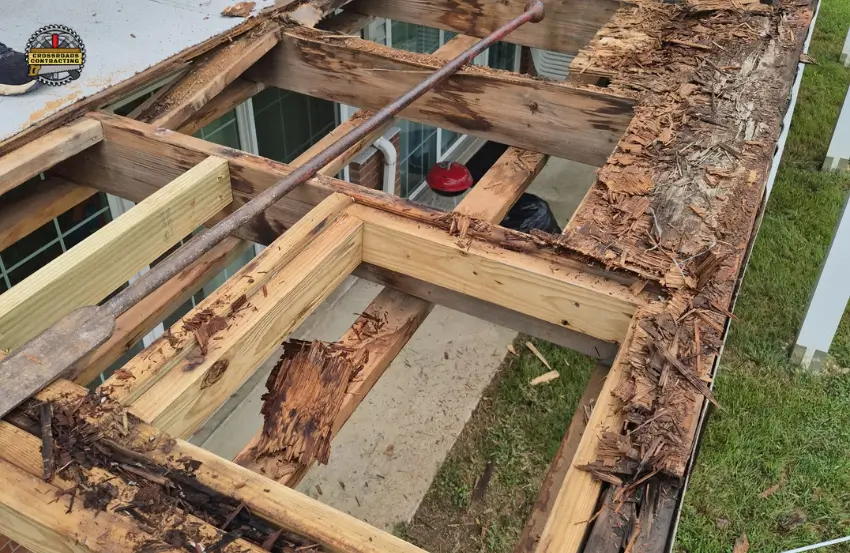
A professional roof inspection Anne Arundel County homeowners can arrange may identify damaged shingles, deteriorated flashing, ventilation problems, exposed decking, leaks, or other conditions that are difficult to see from ground level.
Storm damage requires particular attention because wind, hail, falling branches, and severe weather can create problems that become more expensive when you delay repairs. A contractor can document visible damage and explain which repairs are necessary. Homeowners dealing with an insurance claim should also keep photographs, inspection records, estimates, receipts, and other project documentation.
The goal should be to repair verified damage rather than automatically replacing an entire roof without evidence that replacement is necessary.
How Does Maryland Roofing Compare With Nearby Virginia and Washington, DC?
Roofing decisions in Maryland should be based on the property’s actual condition and the requirements of the jurisdiction where the work occurs. Homeowners moving between Maryland, Virginia, and Washington, DC should not assume that a contractor’s licensing or permitting process is identical across all three areas.
A company working on a Maryland property must meet Maryland’s applicable requirements, while projects in Virginia or Washington, DC are subject to their own licensing and building regulations. For homeowners comparing contractors across the broader Washington metropolitan region, verifying the contractor’s authorization for the specific project location is therefore important.
This is particularly relevant for contractors advertising across multiple service areas. A company’s ability to work in one jurisdiction does not automatically mean that the same requirements have been satisfied in another.
What Makes a Roofing Project a Better Long-Term Investment?
The long-term value of roofing work depends on durability, correct installation, appropriate materials, ventilation, water management, and maintenance. Proper flashing around roof penetrations can help reduce leakage risk, while appropriate ventilation can support roof-system performance.
Homeowners should also understand warranty terms before signing a contract. A manufacturer’s material warranty and a contractor’s workmanship warranty are not necessarily the same thing. Ask what each warranty covers, how long it lasts, and what conditions could affect coverage.
For homeowners researching Anne Arundel County roofing companies, the most useful approach is to verify credentials, compare detailed scopes of work, understand permit requirements, document existing conditions, and select materials appropriate for the property. This creates a more informed foundation for decisions about roof repair, replacement, maintenance, or storm-damage restoration.
Crossroads Contracting LLC can be included in a homeowner’s research when comparing Maryland roofing and exterior-construction providers. Before beginning any project, homeowners should confirm the company’s current credentials, service availability for their property, written scope, insurance documentation, warranty terms, and permitting responsibilities. That process helps turn a roofing decision from a simple price comparison into a practical evaluation of protection, compliance, durability, and long-term value.