Asphalt shingle granule loss happens when the small mineral particles covering the surface of roofing shingles become loose or detach from the asphalt coating. Common causes include normal aging, severe weather, hail impacts, high winds, improper roof traffic, installation problems, and poor granule adhesion. A small amount of loose granules can be normal, especially with newer shingles, but concentrated or excessive loss can expose the asphalt layer and accelerate roof deterioration. GAF identifies natural weathering, roof traffic, inadequate adhesion, and the shedding of excess granules from new shingles as recognized causes of granule loss.
For Maryland homeowners, asphalt shingle granule loss deserves attention because weather conditions can put additional stress on roofing systems. Heavy rain, wind events, temperature changes, humidity, and hail can contribute to surface deterioration. Crossroads Contracting LLC can evaluate whether granule loss represents normal aging, isolated storm damage, or a broader roofing problem. A professional inspection is particularly useful when granules are accumulating heavily in gutters, bare areas are visible on shingles, or leaks and other signs of damage appear.
What Does Asphalt Shingle Granule Loss Look Like?
Asphalt shingles are manufactured with a protective layer of mineral granules embedded into the asphalt surface. These granules help protect the asphalt from sunlight and weather exposure while contributing to the shingle’s appearance and performance.
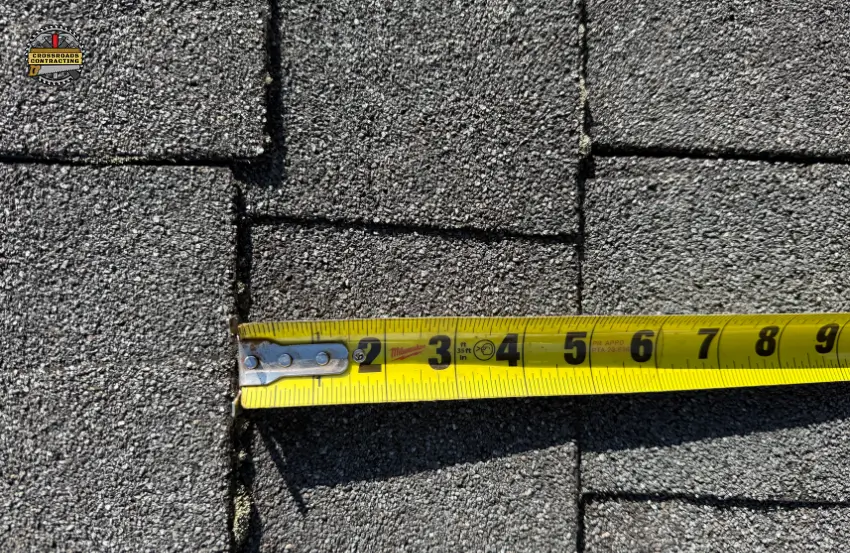
When granules begin to disappear, homeowners may notice unusually dark or smooth-looking areas on individual shingles. The surface may appear patchy, with some sections showing significantly more granule coverage than others. Another common warning sign is a noticeable amount of granules collecting inside gutters or at downspout outlets.
Not every loose granule means the roof is failing. New asphalt shingles can shed excess granules during manufacturing, transportation, handling, and installation. GAF notes that this early shedding can occur without affecting shingle performance.
The important distinction is between normal shedding and excessive or localized loss.
What Are the Main Asphalt Shingle Granule Loss Causes?
Natural Aging and Weathering
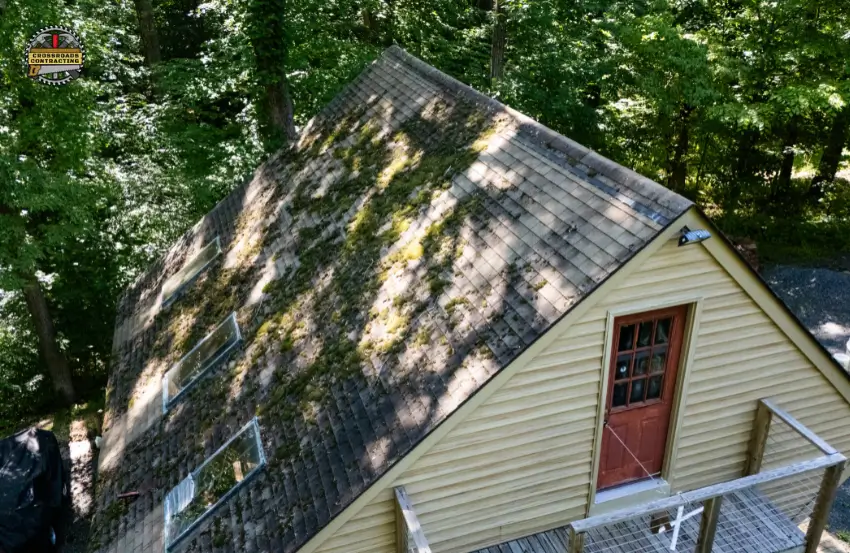
Aging is one of the most common explanations for gradual granule loss. Asphalt shingles are continuously exposed to ultraviolet radiation, rain, wind, temperature changes, and seasonal weather. Over time, the asphalt coating can become less flexible, allowing granules to loosen.
Maryland’s changing seasons can make roof maintenance especially important. A roof exposed to summer heat, winter freezing conditions, storms, and prolonged moisture may gradually show more visible wear.
When granule loss is widespread across an older roof, repair may not provide a long-term solution. The condition of the underlying shingles, flashing, ventilation, decking, and other components should be considered before deciding whether repair or replacement makes financial sense.
Hail and Severe Storms
Hail can cause localized damage by striking the shingle surface with enough force to dislodge granules. Wind events can also contribute to granule loss, particularly when shingles are already weathered or when flying debris impacts the roof.
GAF notes that storm-related granule loss can expose the asphalt coating and potentially accelerate shingle aging and deterioration.
After a significant Maryland storm, homeowners should look beyond obvious missing shingles. Localized granule loss, bruising, exposed asphalt, damaged flashing, and lifted shingle edges can indicate damage that is not immediately visible from the ground.
Excessive Roof Traffic
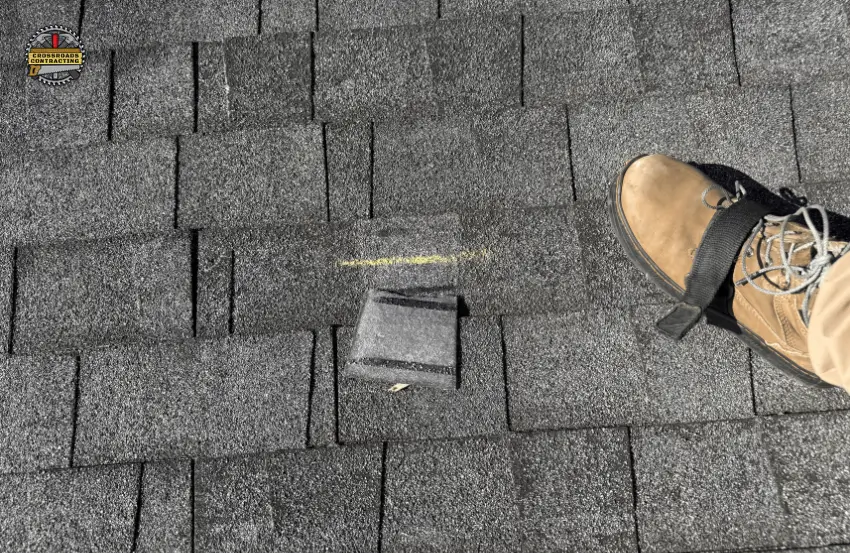
Walking on asphalt shingles can loosen granules, particularly when the roof is hot or when footwear places concentrated pressure on the surface. GAF specifically identifies roof traffic as a potential cause of granule loss.
This is one reason roof inspections, satellite equipment installation, solar work, chimney maintenance, and other roof-related activities should be handled carefully.
How Can You Tell Whether Granule Loss Requires Repair?
The pattern and extent of the damage matter more than the presence of a few loose granules.
A professional inspection should determine whether the granule loss is isolated or widespread. The inspector should also examine shingle age, exposed asphalt, cracking, curling, blistering, flashing, roof penetrations, ventilation, gutters, and signs of water intrusion.
For homeowners searching for Roof Shingle Granule Loss Repair, the first step should be identifying the actual cause. Replacing a few damaged shingles may be appropriate when the problem is localized. However, replacing individual shingles will not solve widespread deterioration across an aging roof.
Crossroads Contracting LLC provides roof inspections throughout Southern Maryland and evaluates shingles, flashing, ventilation, gutters, leak-prone areas, and visible storm damage.
For a direct service connection, homeowners can review the company’s roof inspection services before scheduling an assessment.
Granules Missing From Asphalt Shingles: Repair or Replacement?
The right solution depends on the roof’s overall condition.
| Roof Condition | Typical Approach |
|---|---|
| Minor granule shedding on newer shingles | Monitor and inspect |
| A few damaged shingles | Targeted shingle repair |
| Localized hail or storm damage | Damage assessment and repair |
| Widespread granule loss on an older roof | Consider roof replacement |
| Granule loss combined with leaks | Prompt professional inspection |
A localized problem can sometimes be addressed without replacing the entire roof. However, extensive granule loss can indicate that the protective surface of the shingles is deteriorating. In that situation, continued patching may provide limited return on investment compared with a properly planned replacement.
The goal should not be to recommend replacement simply because granules are present in a gutter. The decision should be based on evidence, roof age, remaining service life, damage patterns, moisture intrusion, and the condition of the complete roofing system.
Maryland Weather and Roof Granule Loss
Maryland’s roofing environment varies from coastal communities in Calvert County to properties closer to Washington, DC and Northern Virginia. Homes around North Beach, Chesapeake Beach, Dunkirk, Huntingtown, and Prince Frederick can experience coastal humidity, wind-driven rain, storms, and seasonal temperature changes.
Homes farther inland across Maryland, Northern Virginia, and the Washington, DC region face their own combination of heat, freezing temperatures, thunderstorms, hail, and wind.
That means the same amount of granule loss can have different implications depending on the roof’s age, material quality, installation history, exposure, and maintenance record.
For coastal Southern Maryland properties, routine inspections can be particularly useful because early deterioration may be easier and less expensive to address before water reaches the roof deck or interior of the home.
What Does Granule Loss Mean for Roof Safety and Home Value?
Granule loss is not simply an appearance issue when it becomes excessive. GAF explains that storm-related granule loss can expose the asphalt coating and contribute to accelerated aging.
A deteriorating roof can eventually create moisture problems that affect insulation, ceilings, walls, framing, and other building components. Early diagnosis can therefore protect more than the shingles themselves.
There is also a financial consideration. A homeowner who identifies localized damage early may be able to complete a targeted repair rather than replacing an otherwise serviceable roof. Conversely, delaying an aging roof with widespread deterioration can allow small problems to develop into more expensive water-related repairs.
For homeowners considering selling, documented roof inspections and maintenance can also provide useful information for understanding the property’s condition before negotiations begin.
Maryland Roofing Compliance and Professional Inspection
Roof work may involve local permitting requirements depending on the scope and property location. Calvert County states that roof construction or replacement of sheathing generally requires a building permit, while certain shingle-only replacement situations can have different requirements. Properties within municipalities such as North Beach or Chesapeake Beach may also have additional local requirements.
For larger roofing work, homeowners should confirm applicable requirements before construction begins. Using a properly licensed contractor can also help reduce compliance and workmanship risks.
Crossroads Contracting LLC serves homeowners throughout Southern Maryland, including North Beach, Chesapeake Beach, Dunkirk, Huntingtown, Prince Frederick, and surrounding communities. The company is based in North Beach and provides roofing inspections, repairs, storm damage services, and replacement solutions.
For homeowners concerned about asphalt shingle granule loss, the most useful next step is an evidence-based roof evaluation rather than automatically choosing repair or replacement. A qualified inspection can identify whether the granules are simply part of normal aging or whether they indicate storm damage, material deterioration, installation concerns, or a roof approaching the end of its useful life.
Homeowners can also contact Crossroads Contracting LLC for a roof assessment and discuss the condition of the roofing system before making a major investment.
Conclusion
Asphalt shingle granule loss can result from normal weathering, aging, roof traffic, storm impacts, wind, hail, or installation and material-related problems. A small amount of loose granules may be normal, particularly on a newer roof, while widespread or concentrated loss can signal accelerated deterioration.
The best approach is to evaluate the pattern, roof age, weather history, exposed asphalt, shingle condition, and signs of moisture before deciding on Roof Shingle Granule Loss Repair or replacement. For Maryland homeowners, timely inspection can improve roof security, protect the home from water damage, and help ensure that money is spent on the right solution rather than unnecessary work.