
Roof shingles curling or cupping is often a warning sign that asphalt shingles are aging, exposed to excessive heat or moisture, improperly installed, or beginning to deteriorate. Curling occurs when the edges or corners of shingles bend out of position. Cupping creates a shallow, bowl-like shape as the shingle surface becomes distorted.
Both conditions can make roofing materials more vulnerable to wind and water damage. However, not every curled shingle means your entire roof needs replacement.
For homeowners in North Beach, Chesapeake Beach, Dunkirk, Huntingtown, Prince Frederick, and surrounding Southern Maryland communities, regular exposure to humidity, strong winds, rainfall, and seasonal temperature changes can contribute to roofing wear.
At Crossroads Contracting LLC, we help homeowners identify roofing problems and determine whether localized repairs or a more extensive replacement should be considered.
Understanding why your shingles are curling is the first step toward preventing additional damage.
What Is the Difference Between Curling and Cupping Roof Shingles?
Although these problems are related, they do not look exactly alike.
| Condition | Appearance | Possible Concern |
|---|---|---|
| Curling | Shingle edges or corners bend upward or downward | Aging, heat exposure, or material deterioration |
| Cupping | Shingle edges rise relative to the center, forming a shallow bowl | Moisture, aging, or material distortion |
| Clawing | Shingle edges curve downward while the center appears raised | Aging or material deterioration |
| Lifted shingles | Shingles separate from the roof surface | Wind damage, fastening, or sealing problems |
| Cracked shingles | Visible splits appear in roofing material | Brittleness, aging, or physical damage |
Curling and cupping may appear on the same roof. Some affected shingles also show cracking, granule loss, or loose edges.
A professional assessment helps determine whether the changes are cosmetic, localized, or signs of more serious deterioration.
5 Common Causes of Roof Shingles Curling
1. Natural Aging and Sun Exposure
Asphalt shingles gradually lose flexibility as they age.
Years of exposure to ultraviolet radiation, rain, wind, and temperature fluctuations can cause roofing materials to deteriorate.
Common signs of aging include:
- Curled or distorted shingle edges
- Cracking or splitting
- Missing protective granules
- Brittle shingle surfaces
- Uneven or discolored roof areas
Different shingle products have different service lives. Many conventional three-tab asphalt roofs have historically been associated with shorter service lives than premium architectural products, although actual performance depends on installation, weather, ventilation, maintenance, and material specifications.
Architectural shingles often offer heavier construction and different performance characteristics, but no shingle type is immune to aging.
When curling appears across large sections of an older roof, replacing a few shingles may not resolve the overall problem.
2. Poor Attic Ventilation
Inadequate attic ventilation can allow excessive heat and moisture to accumulate beneath the roof deck.
Over time, these conditions may contribute to roofing material deterioration, condensation, wood damage, and insulation problems.
Homeowners may notice:
- Excessive attic heat
- Musty odors
- Damp insulation
- Condensation on attic surfaces
- Discoloration or deterioration of roof decking
A balanced ventilation system generally uses suitable intake and exhaust ventilation to help manage attic conditions.
However, adding ventilation without identifying the actual moisture source may not solve the problem. Air leaks from conditioned living spaces, bathroom exhaust ducts, and insulation deficiencies may also require attention.
Related reading: What Are the Signs of Wet Attic Insulation?
3. Improper Roof Installation
Installation mistakes can affect how shingles remain positioned and sealed.
Potential installation problems include incorrect nail placement, inadequate fastening, poorly aligned shingles, unsuitable roof preparation, and failure to follow manufacturer requirements.
For example, shingles installed without the required fastening pattern may become more vulnerable to wind uplift.
Some newly installed asphalt shingles also need sufficiently warm conditions to activate their factory-applied sealing strips. Shingles installed during colder weather may take longer to seal.
This does not automatically indicate defective installation, but persistent lifting or distortion deserves professional evaluation.
A qualified roofing contractor should examine fasteners, shingle condition, flashing, roof slope, and manufacturer installation requirements before recommending repairs.
4. Moisture and Roof Deck Damage
Moisture can contribute to roofing problems when water reaches underlying roof components.
Common sources include damaged flashing, leaking roof penetrations, deteriorated underlayment, and existing openings in the roofing system.
Prolonged moisture exposure may damage roof decking and affect the stability of the surface beneath the shingles.
Warning signs include ceiling stains, peeling paint, damp insulation, visible wood deterioration, and recurring leaks.
Homeowners should avoid assuming that curled shingles are always the original cause of a leak. Sometimes a flashing defect or ventilation problem is responsible for both the moisture damage and the visible roofing deterioration.
A complete inspection should identify the moisture source before repair work begins.
5. Strong Winds and Seasonal Temperature Changes
Southern Maryland roofs experience changing temperatures and periodic strong winds.
Repeated expansion and contraction can place stress on roofing materials, especially as shingles age.
Wind can also lift improperly sealed shingles or damage weakened edges.
Although wind-related lifting is different from gradual curling caused by aging, both conditions can sometimes appear together.
Related reading: What Causes Roof Shingles to Lift Without Blowing Off?
After a significant storm, inspect the roof visually from the ground. Look for missing shingles, unusual raised edges, fallen roofing materials, and new interior water stains.
Do not climb onto a damaged roof to investigate.
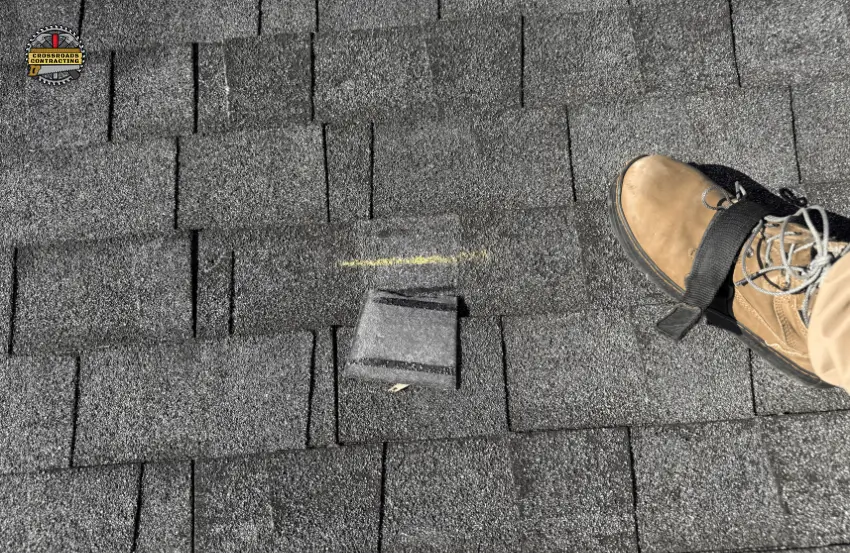
How Can You Tell When Curling Shingles Need Repair?
Not every distorted shingle presents the same level of risk.
Use this checklist to identify problems that deserve attention:
Several shingles have visibly curled edges.
Shingles are cracked, brittle, or missing granules.
Corners appear raised or loose.
Water stains have appeared on ceilings.
Attic insulation feels damp or looks discolored.
Wind has displaced shingles.
Previous repairs have failed to stop leaks.
The severity of the problem helps determine the next step.
| Warning Sign | Potential Problem | Recommended Action |
|---|---|---|
| A few curled shingles | Localized wear | Request an inspection |
| Curling across a large roof section | Widespread deterioration | Evaluate repair versus replacement |
| Cracking and heavy granule loss | Aging roofing materials | Assess remaining service life |
| Interior water stains | Possible active leak | Investigate promptly |
| Loose shingles after strong winds | Potential wind damage | Document and inspect |
| Repeated leaks | Unresolved underlying defects | Inspect the full roofing system |
Even when no water is visible inside the home, curling can indicate that the roof is becoming less reliable.
Schedule a Professional Roof Inspection
Crossroads Contracting LLC helps Southern Maryland homeowners evaluate damaged shingles, flashing, attic ventilation, and potential moisture problems.
Request Your Free Roof Inspection or Call (443) 219-7323.
Should You Repair or Replace Curling Roof Shingles?
The right solution depends on the roof’s age, condition, and extent of deterioration.
When Repair May Be Appropriate
Localized repairs may be reasonable when only a few shingles are affected, surrounding roofing materials remain flexible, the decking is sound, and compatible replacement shingles are available.
A roofing contractor may replace damaged shingles or correct an associated flashing or installation defect.
When Roof Replacement May Be Better
Replacement deserves consideration when curling affects large areas, shingles have become brittle, leaks are recurring, or the roof is approaching the end of its useful service life.
Repeated small repairs may become costly when the underlying problem affects the entire roofing system.
For professional help, explore our roof repair services in Southern Maryland or learn more about our roof installation and replacement services.
How Much Does It Cost to Repair Curling Roof Shingles in Maryland?
The cost to repair curling or cupping roof shingles in Southern Maryland depends on the number of damaged shingles, roof accessibility, labor, and whether the underlying roof deck or flashing also needs repair.
Minor repairs may cost a few hundred dollars, while larger repairs involving widespread shingle damage or water intrusion can cost significantly more. These figures are general planning estimates, not a confirmed quote from Crossroads Contracting LLC.
Before approving repairs, ask for a written estimate that explains the damaged areas, materials required, labor costs, and any additional work needed to address the underlying cause.
If curling affects a large portion of the roof, compare the cost of repeated repairs with the long-term value of roof replacement.
For an assessment of your roof, request a free roof inspection from Crossroads Contracting LLC.
Does Homeowners Insurance Cover Curling Roof Shingles?
Homeowners insurance generally distinguishes gradual deterioration from sudden covered damage.
Curling caused by normal aging, long-term moisture exposure, or neglected maintenance is often excluded under standard homeowners insurance policies.
However, shingles damaged by a covered windstorm or another insured event may qualify for coverage, depending on the policy and the circumstances.
Homeowners should document:
- The date of the suspected storm
- Photographs of visible damage taken safely
- Any interior water stains
- Previous roof maintenance and inspection records
- The insurer’s claim documentation
Curling alone does not establish that storm damage occurred.
A professional roof inspection in Southern Maryland can help identify whether the observed condition appears consistent with aging, installation issues, or a particular weather event.
The insurance company makes the final coverage determination.
Can a Manufacturer Warranty Cover Curling Shingles?
Some roofing material warranties provide remedies for qualifying manufacturing defects.
However, warranties generally include exclusions and specific conditions.
Normal aging, inadequate ventilation, improper installation, or damage caused by outside events may not be covered.
For example, GAF’s Shingle & Accessory Limited Warranty identifies coverage requirements and exclusions, including certain installation and ventilation-related causes.
When premature shingle distortion appears, homeowners should:
- Locate the original roofing contract and material warranty.
- Identify the shingle manufacturer and product.
- Photograph the affected areas safely.
- Record the approximate installation date.
- Request an inspection documenting the condition.
- Contact the manufacturer or original installing contractor about applicable warranty procedures.
Warranty eligibility should never be assumed based on appearance alone.
How Can You Prevent Roof Shingles from Curling?
Although shingles naturally age, good maintenance can help reduce avoidable damage.
Maintain Proper Attic Ventilation
Have the attic checked for heat buildup, moisture sources, blocked vents, and insulation problems.
Keep Gutters Clear
Clogged gutters can contribute to drainage problems and moisture exposure around roof edges.
Address Small Roofing Defects
Damaged flashing, loose shingles, and leaking penetrations should be assessed before water reaches the roof deck.
Inspect After Major Storms
Look for missing, displaced, or damaged shingles from a safe location.
Use Suitable Roofing Materials
Choose products that meet your roof’s design requirements and the manufacturer’s installation instructions.
Keep Maintenance Records
Save inspection photographs, repair invoices, installation documents, and warranty information.
These records may be valuable when planning repairs, selling a property, or discussing a possible insurance claim.
Why Roofing Conditions Matter in Southern Maryland
Homes near the Chesapeake Bay and throughout Calvert County face a combination of rainfall, humidity, wind exposure, and seasonal temperature changes.
Properties in North Beach and Chesapeake Beach may experience different exposure conditions from homes farther inland in Dunkirk, Huntingtown, or Prince Frederick.
Roof slope, tree cover, attic conditions, age, and previous installation quality all influence how a roofing system performs.
Crossroads Contracting LLC serves homeowners throughout Southern Maryland and provides roofing inspections, repairs, replacement, and storm damage services.
We evaluate the visible condition of your roofing system and help you understand which next steps are appropriate for your property.
Frequently Asked Questions
Can curled roof shingles be repaired without replacing the entire roof?
Yes. Localized damage may be repairable when the surrounding shingles are in good condition and the roof deck remains sound. Widespread curling or brittle materials may make replacement more practical.
How much does it cost to repair curling shingles?
Minor shingle repairs may fall within a few hundred dollars, while more extensive asphalt shingle repairs can reach $1,500 or more. Actual costs depend on the repair scope, material condition, and roof access.
Do curling shingles always cause roof leaks?
No. Some curled shingles remain watertight for a period, but distortion may increase vulnerability to water intrusion and wind damage. An inspection is recommended when curling becomes noticeable.
Can poor attic ventilation cause roof shingles to curl?
Yes. Excessive attic heat and moisture can contribute to premature roofing deterioration. However, an inspection is necessary to establish the actual cause.
Are architectural shingles less likely to curl than three-tab shingles?
Architectural shingles typically have different construction and performance characteristics, but their resistance to deterioration depends on product quality, installation, ventilation, environmental exposure, and age.
Does homeowners insurance cover curling shingles?
Usually not when curling results from gradual wear, aging, or maintenance-related issues. Sudden storm damage may be covered depending on the insurance policy and documented cause.
Should I replace my roof immediately when shingles begin curling?
Not necessarily. The correct decision depends on the extent of damage, the condition of surrounding materials, the roof’s age, and the presence of leaks.
Protect Your Southern Maryland Home from Roofing Damage
Curling or cupping shingles should not be ignored, especially when accompanied by missing granules, cracking, raised edges, or interior moisture.
Early inspection can help determine whether the problem requires a localized repair, improved attic ventilation, or a broader roofing solution.
Crossroads Contracting LLC helps homeowners throughout North Beach, Chesapeake Beach, Dunkirk, Huntingtown, Prince Frederick, and nearby Southern Maryland communities protect their properties.
Schedule a Free Roof Inspection
Call (443) 219-7323 to discuss your roofing concerns and request an inspection.


