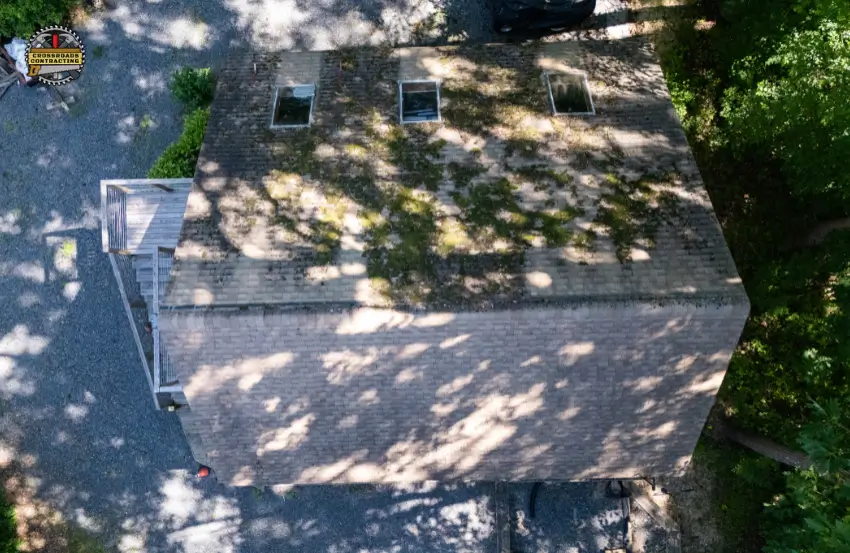
Moss commonly develops on roofs when moisture, shade, and limited sunlight allow the surface to remain damp for extended periods. In Maryland, homes surrounded by trees or located in areas with humid weather can be particularly susceptible to moss growth. Moss is more than a cosmetic concern because persistent moisture can keep asphalt shingles damp and contribute to premature deterioration. The U.S. Environmental Protection Agency notes that moss and lichen growth on asphalt roofs can keep roofing materials damp, making proper maintenance important.
For homeowners in North Beach, Chesapeake Beach, Dunkirk, Huntingtown, Prince Frederick, and other Southern Maryland communities, the first step is identifying why the moss is growing rather than simply removing the visible growth. Shade from nearby trees, poor roof drainage, accumulated leaves, and areas that dry slowly can all create favorable conditions. University of Maryland Extension also explains that moss generally thrives in semi-shady locations with abundant moisture.
When moss is already established, homeowners should avoid aggressively scraping or pressure-washing shingles. Improper cleaning can loosen granules or damage roofing materials. A professional evaluation can determine whether roof moss removal, maintenance, repair, or replacement is the appropriate solution. Crossroads Contracting LLC serves homeowners in Southern Maryland and can evaluate roof conditions before a small maintenance concern develops into a larger roofing problem.
What Causes Moss to Grow on Roof Shingles?
Moss needs moisture and a suitable surface where it can establish itself. Roofing areas that stay wet for long periods provide favorable conditions for growth.
Several common factors contribute to moss growth:
- Heavy shade: Trees can block sunlight and slow the drying of shingles after rain.
- Persistent moisture: Humid conditions, rainfall, dew, and poor drainage can keep roofing materials damp.
- Leaf and debris buildup: Organic debris can trap moisture against shingles.
- Poor roof drainage: Water that does not move efficiently away from the roof can create consistently damp areas.
- North-facing or shaded roof slopes: These areas may receive less direct sunlight and dry more slowly.
- Aging roofing materials: Older shingles may have accumulated surface wear and become more vulnerable to moisture-related deterioration.
University of Maryland Extension states that moss generally performs well in damp, shady environments. That same basic environmental preference explains why moss can become established on roof surfaces that remain shaded and wet.
Does Moss Damage Asphalt Shingles?
Moss does not automatically mean that a roof needs replacement, but significant or persistent growth should not be ignored. The primary concern is the moisture associated with the growth.
Moss can create conditions where sections of shingles remain damp longer than they otherwise would. The EPA specifically identifies moss and lichen growth on asphalt roofs as a condition that can keep roofing materials damp.
Over time, homeowners may notice:
| Roof Condition | Why It Matters |
|---|---|
| Green or thick moss patches | Indicates persistent moisture and shade |
| Raised or displaced shingles | May allow water to reach vulnerable areas |
| Missing granules | Can indicate aging or surface deterioration |
| Dark, damp areas | May point to poor drying conditions |
| Moss around roof edges | Can be associated with debris or drainage problems |
| Water stains inside the home | May indicate a separate or developing leak |
The extent of moss damage to roof shingles depends on the roof’s age, material, slope, moisture exposure, and how long the problem has been present.
How to Remove Moss From Roof Shingles Safely
Many homeowners search for how to remove moss from roof shingles and immediately consider a pressure washer or stiff brush. That approach can be risky.
Roof shingles are designed to protect the structure beneath them, and aggressive cleaning can damage the roofing surface. The EPA’s roof-maintenance guidance emphasizes careful maintenance of asphalt shingle roofs and specifically addresses moss and lichen because they can keep roofing materials damp.
A safer process generally includes:
- Inspect the roof first. Determine whether the growth has affected shingles, flashing, valleys, or other components.
- Identify the moisture source. Look for shade, leaves, clogged drainage, or areas that remain wet.
- Use an appropriate moss-treatment method. Any chemical product should be specifically labeled for the intended roofing application and used according to its directions.
- Avoid damaging the shingles. Do not aggressively scrape, walk unnecessarily on the roof, or use excessive pressure.
- Inspect after removal. Look for broken, lifted, cracked, or missing shingles.
- Address the underlying conditions. Removing moss without improving moisture and shade conditions may allow it to return.
For safety, homeowners should not climb onto a steep, wet, or heavily moss-covered roof. Professional roof moss removal can reduce the risk of falls and accidental shingle damage.
Why Maryland Homes Can Be Susceptible to Roof Moss
Maryland’s varied weather conditions can create repeated wet-and-dry cycles on residential roofs. Properties in Southern Maryland may also have mature trees close to houses, creating shaded roof sections.
Homes in North Beach, Chesapeake Beach, Dunkirk, Huntingtown, Prince Frederick, Lusby, and surrounding Calvert County communities can have different roof orientations, tree coverage, drainage patterns, and levels of sun exposure. Therefore, two neighboring homes can experience very different levels of moss growth.
The correct solution should be based on the individual roof rather than simply applying the same treatment to every property.
Roof Moss Prevention Tips
Preventing moss is generally easier than dealing with extensive growth later.
Homeowners can reduce the likelihood of recurring growth by:
- Keeping roof valleys and drainage areas clear of leaves and debris.
- Maintaining gutters and downspouts so rainwater can move away efficiently.
- Trimming vegetation when branches create excessive shade over the roof.
- Scheduling periodic roof inspections.
- Watching for damaged or missing shingles.
- Addressing leaks promptly.
- Monitoring shaded roof sections after extended periods of wet weather.
Good roof maintenance is also useful for identifying other problems before they become expensive repairs.
For related maintenance information, homeowners can review Crossroads Contracting LLC’s roof inspection services and roof maintenance resources when planning ongoing roof care.
When Should You Call a Roofing Contractor?
Professional evaluation is appropriate when moss covers a large section of the roof, returns quickly after cleaning, or appears alongside damaged shingles, leaks, or deteriorated flashing.
A contractor can determine whether the roof needs cleaning, repair, continued maintenance, or replacement. This is especially important on older roofs where moss may be only one visible symptom of broader deterioration.
Crossroads Contracting LLC can inspect roofing conditions for homeowners throughout Southern Maryland. The company serves communities including North Beach, Chesapeake Beach, Dunkirk, Huntingtown, and Prince Frederick and provides roofing-related services based on the condition of the property.
Homeowners can also review roof repair services in Calvert County if moss is accompanied by damaged or leaking roofing materials.
Final Takeaway
Moss grows on roof shingles primarily because of moisture, shade, limited sunlight, and conditions that prevent the roof from drying quickly. Maryland homes surrounded by trees or exposed to persistent moisture can be more susceptible to recurring growth.
Small amounts of moss do not automatically mean that a roof needs replacement. However, persistent growth should be evaluated because keeping asphalt shingles damp can contribute to premature deterioration. Professional inspection and appropriate roof moss removal can help protect the roofing system while identifying underlying drainage, ventilation, or maintenance concerns.
For homeowners in Southern Maryland, early attention is usually more practical than waiting until moss is accompanied by leaks or significant shingle damage. Crossroads Contracting LLC can help evaluate the condition of the roof and determine the appropriate next step.